If you've Googled "how to clean my driveway" or "why is my render going green", you've probably bumped into two terms thrown around as if they're interchangeable: pressure washing and soft washing. They're not. They're solving different problems, on different materials, with very different equipment.
Pick the wrong one and the best case is that nothing happens. The worst case is a four-figure repair bill — stripped render, cracked tiles, dislodged pointing, or paint peeling off a wall that was fine the week before. This guide walks through the difference in plain English, so you know what to ask for (and what to refuse) when you get a quote.
The short answer
Hard surfaces, ingrained dirt
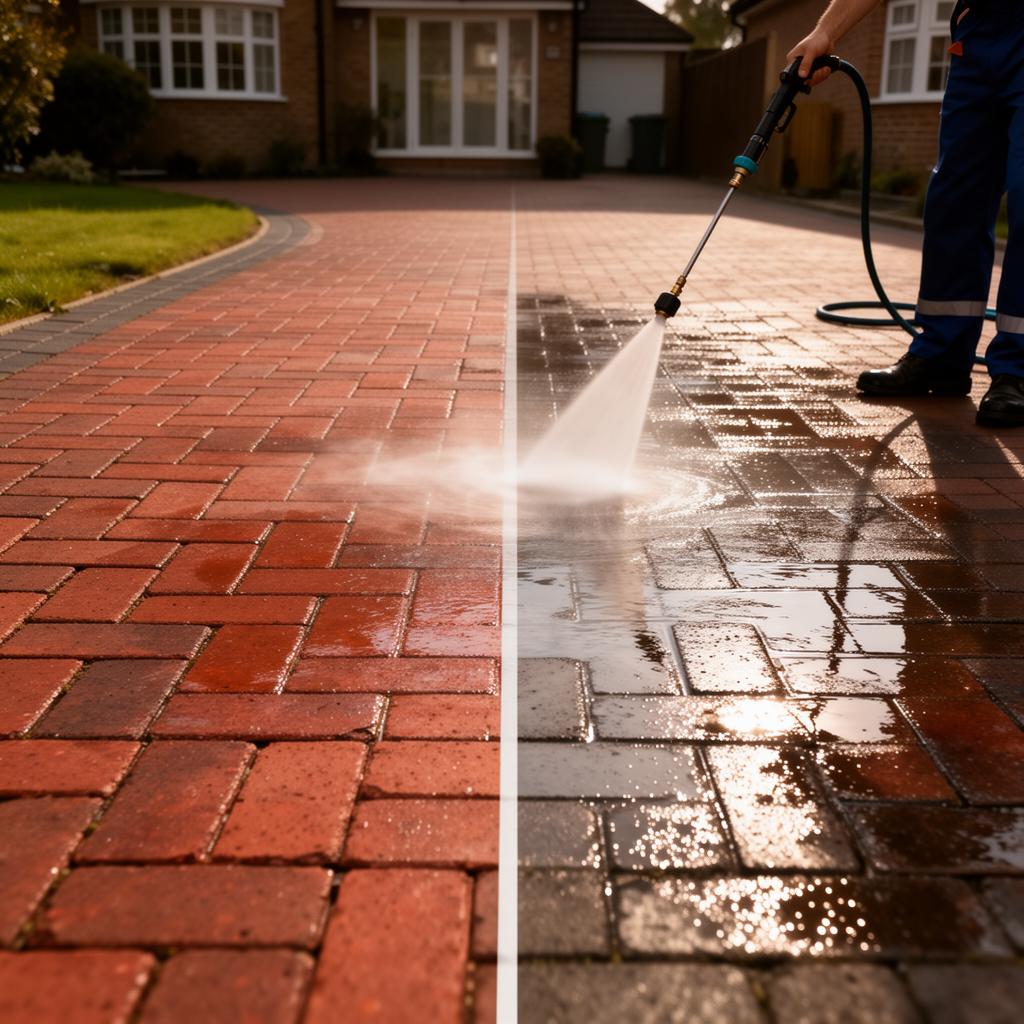
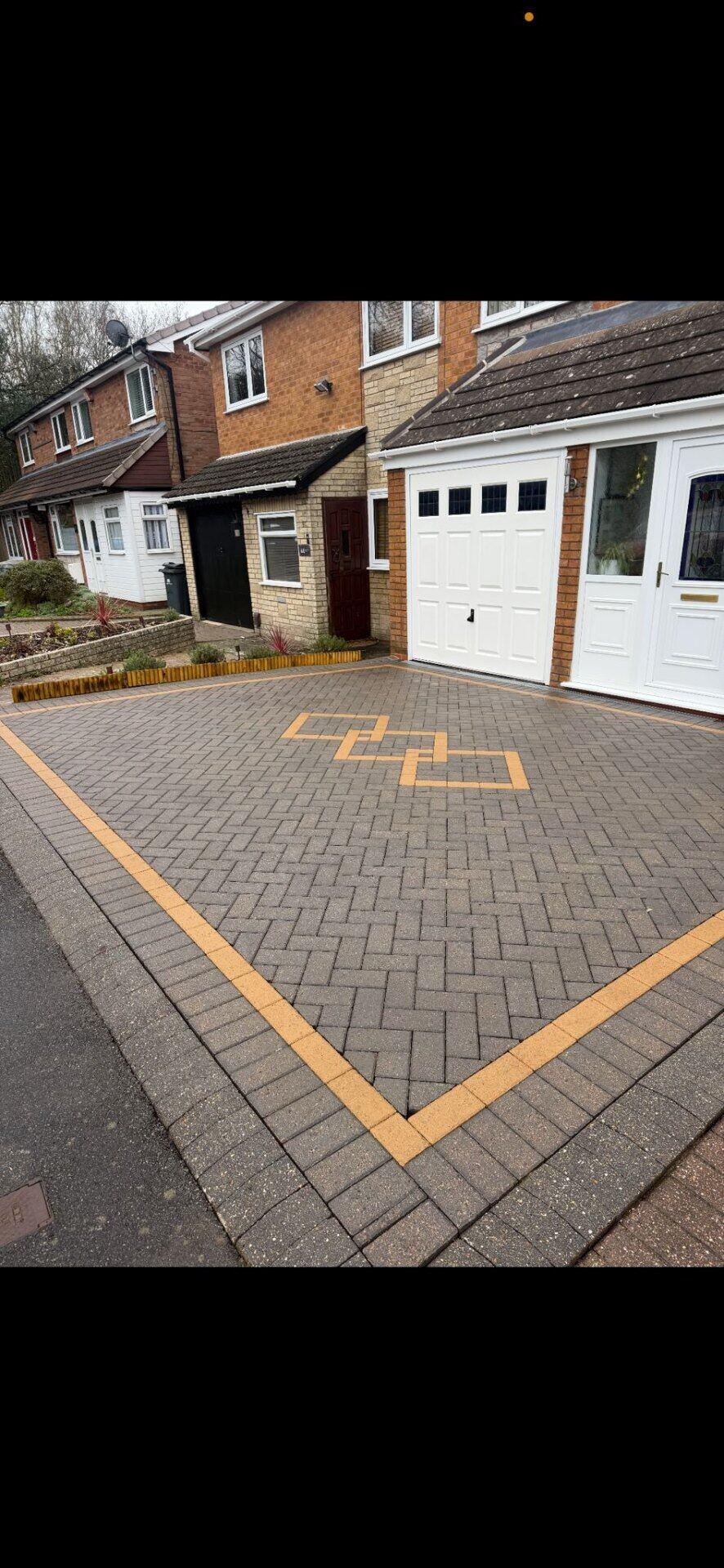
Driveways, patios, paths, steps, concrete, garage floors, sturdy brick walls. Anywhere you need physical force to lift dirt that's bonded to the surface.
Delicate surfaces, biological growth
Render, painted walls, roof tiles, old or soft brick, timber cladding. Anywhere algae, lichen and moss need killing — not blasting — to protect the surface underneath.
What pressure washing actually is
Pressure washing (also called jet washing or power washing) uses water delivered at high pressure — typically 100 to 250 bar on professional kit — to physically dislodge dirt, moss, oil and algae from hard surfaces. On the right material, it's transformative. Block paving, concrete, stone slabs and brick paths come up looking ten years younger in a single afternoon.
The key word there is hard. Pressure washing relies on the surface being able to take the force. Concrete and block paving can. Painted render, soft Victorian brick, lime mortar and roof tiles cannot — they'll erode, lose their coating, or let water in through joints that were never designed to handle a 2,000 PSI jet.
What soft washing actually is
Soft washing flips the approach. Instead of using pressure to physically remove growth, it uses a low-pressure spray — barely more than a garden hose — to apply a cleaning solution (usually a diluted biocide such as sodium hypochlorite or a quaternary ammonium compound). The solution kills algae, lichen, moss and mould at the root, then rinses away with a gentle wash.
Because the chemistry does the work, the surface is never under any mechanical stress. That makes it the right tool for anything painted, rendered, coated, soft, old, or up on a roof. It also tends to last longer — when you kill spores rather than just removing visible green, regrowth is much slower.
A quick decision guide
| Surface | Use |
|---|---|
| Block paving driveway | Pressure wash |
| Concrete patio | Pressure wash |
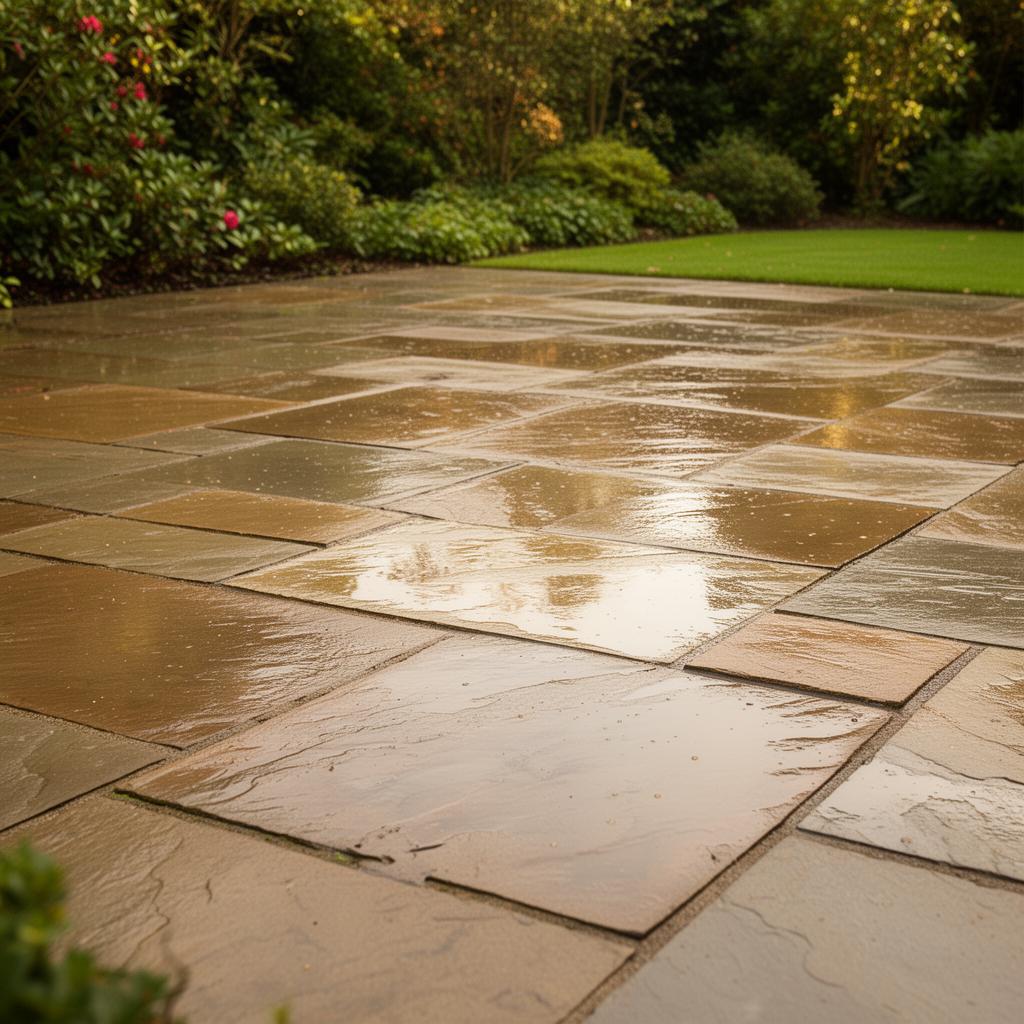
| Indian sandstone patio | Pressure wash (low) |
| Rendered wall | Soft wash |
| Roof tiles | Soft wash |
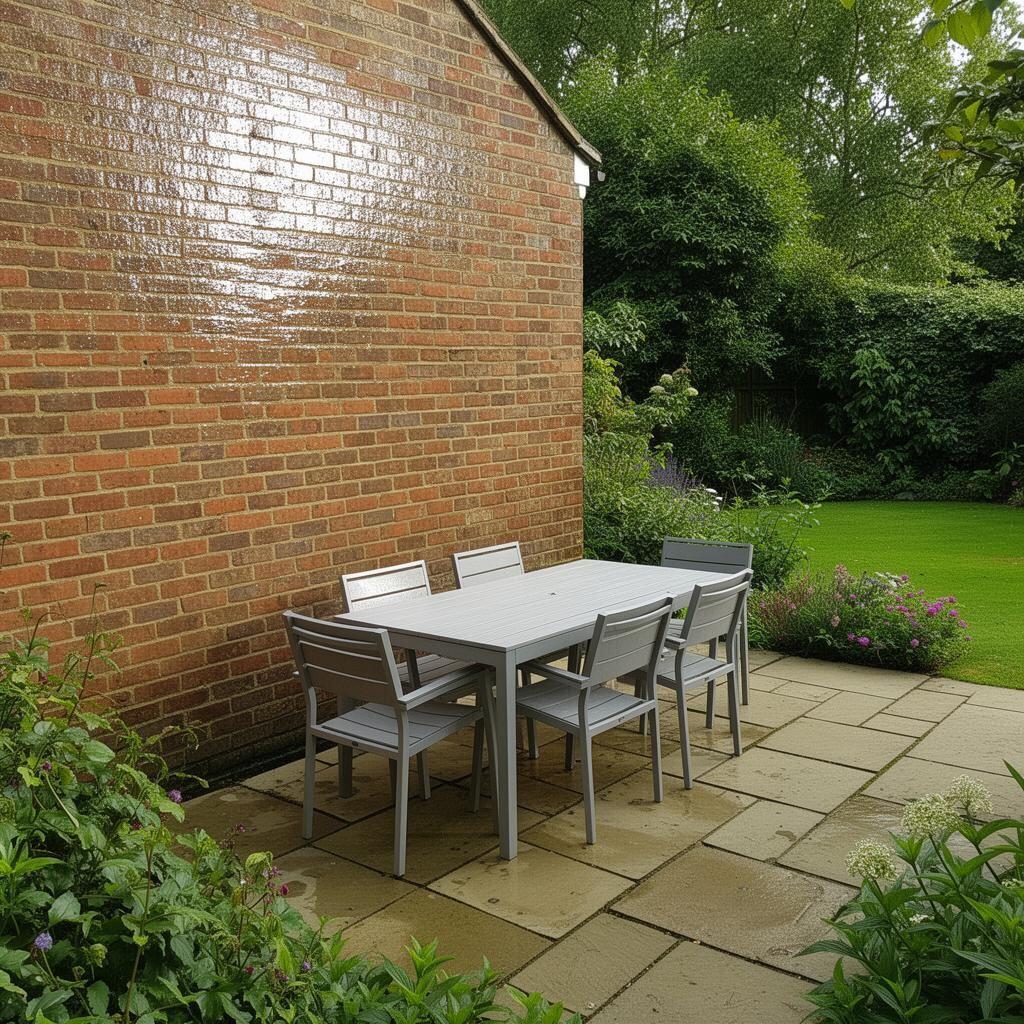
| Old / soft brick | Soft wash |
| Timber fencing | Low-pressure rinse |
| Decking | Pressure wash (low + fan) |
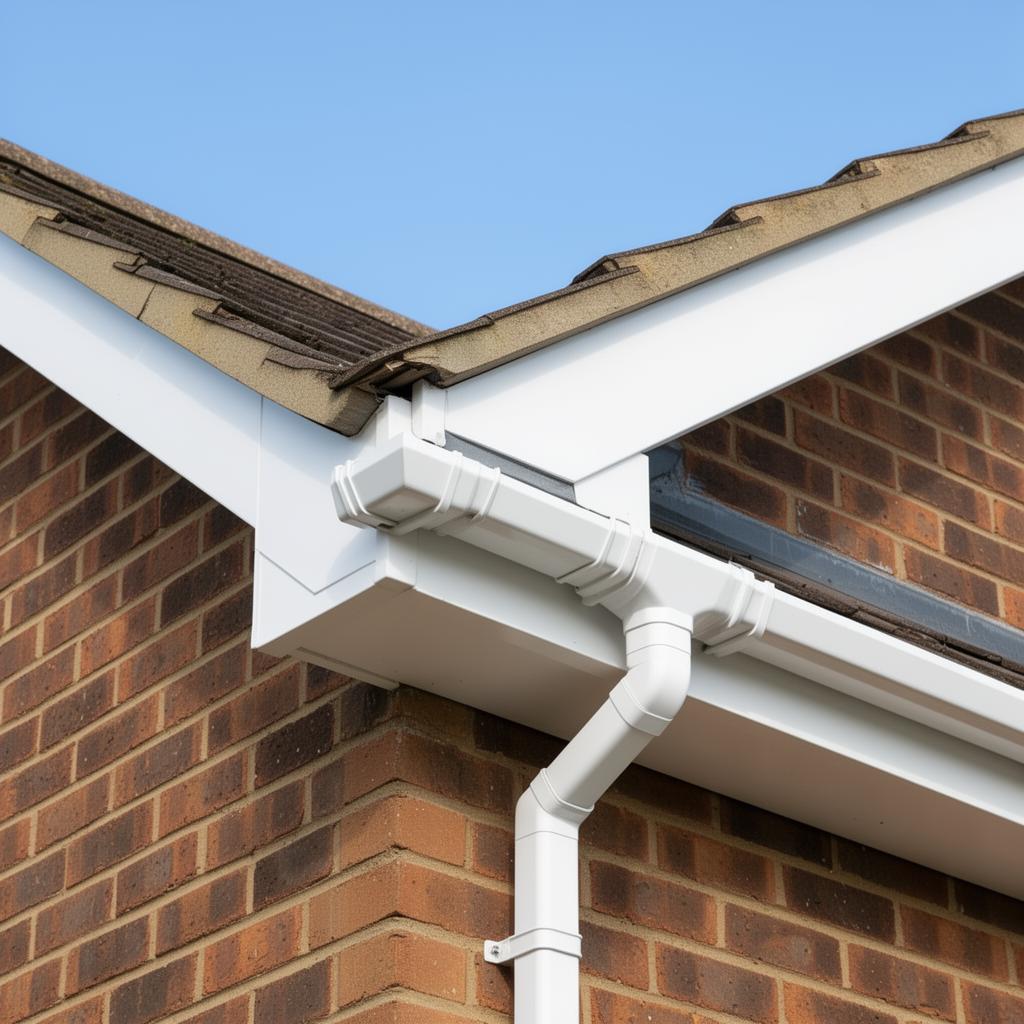
| Gutter exteriors | Soft wash |
Red flags when you're getting a quote
They offer to pressure wash your render or roof. This is the most common — and most expensive — mistake. Walk away.
They quote a flat hourly rate without seeing the property. Good cleaning is matched to the surface; a survey takes 10 minutes.
They don't mention pre-treatment or biocide on a moss-covered patio. Without it, the green is back by next spring.
They use the same nozzle and pressure for the driveway, the fence, and the wall. Different surfaces need different setups.
What we actually do
At Aqua Pressure Solutions, the majority of our work is pressure washing — driveways, patios, paths, steps and hard exterior surfaces. But "pressure washing" doesn't mean we put every job on full blast. We use biocide pre-treatments on biological growth, drop to a wide fan nozzle on Indian sandstone and timber, and step well back from anything painted or rendered.
If your job is purely a roof soft wash, we'll tell you honestly and point you to a specialist. If it's a driveway, a patio, a fence, gutter exteriors, or general garden & exterior cleaning across Birmingham and the West Midlands — that's our job.
The takeaway: if it's hard and dirty, pressure wash. If it's soft, painted, coated, or up high — soft wash. And if anyone tells you different on render or roof tiles, get a second quote.