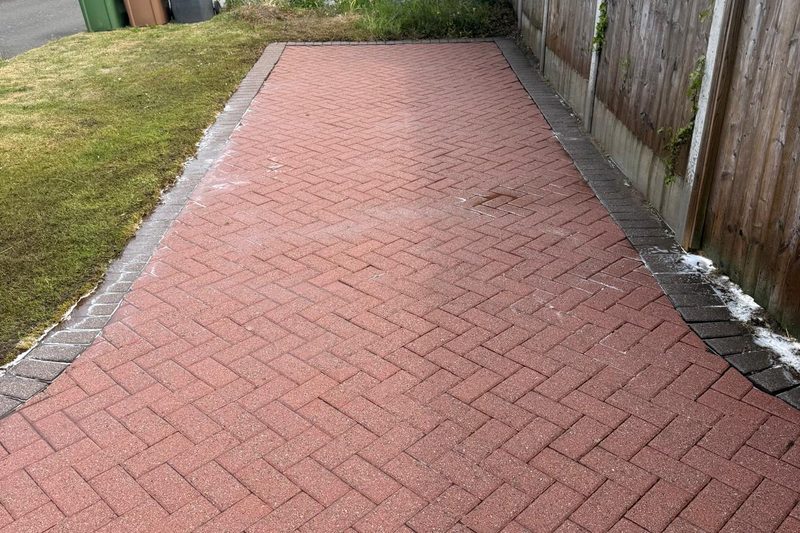
If you've got a dark patch on your driveway that won't shift no matter how hard you scrub, you're not alone. Oil stains are the single most common driveway complaint we hear from homeowners in Birmingham and the West Midlands. They're also one of the most misunderstood — because the method that works for a week-old leak is completely different from what's needed for a stain that's been there five years.
This guide runs through every approach, from the baking-soda trick you can try this afternoon to the industrial chemicals and hot pressure washing we use on site. We'll tell you honestly what works, what doesn't, and when it's worth calling someone in.
First: act fast if the stain is fresh
The golden rule with any oil stain is time. A spill that's an hour old is a surface problem. A spill that's a year old is a structural one — the oil has seeped through the surface layer, into the joints, and sometimes into the sub-base beneath.
If you've just noticed a fresh leak, your first job is absorption, not scrubbing. Cover the stain with cat litter, sawdust, or sand and leave it for at least an hour — ideally overnight. Sweep it up and dispose of it responsibly (don't rinse it down the drain). The more you lift now, the less you have to dissolve later.
DIY method 1: baking soda and dish soap
This is the classic home remedy, and for small, recent stains, it genuinely works. Mix baking soda with water to form a thick paste. Spread it over the stain, then add a few drops of dish soap and scrub with a stiff brush. The baking soda acts as a mild abrasive and absorbent, while the soap breaks down the oil's surface tension.
Leave it for 20–30 minutes, then rinse with warm water. Repeat if needed. For light staining on concrete or block paving, this can lift a surprising amount — but don't expect miracles on deep-set oil.
DIY method 2: white vinegar and laundry detergent
Another kitchen-cupboard approach. Mix equal parts white vinegar and water, spray or pour over the stain, then sprinkle powdered laundry detergent on top. Scrub hard with a deck brush or stiff broom. The vinegar helps break down grease while the detergent lifts it.
This works best on porous concrete where the detergent can get into the pores. On smooth surfaces like tarmac, it's less effective because there's nothing for the mixture to grip.
DIY method 3: WD-40 or brake cleaner (use with caution)
It sounds backwards — adding more oil-based products to remove oil — but solvents like WD-40 or brake cleaner can dissolve the stain so it can be washed away. Spray it on, let it sit for 10 minutes, then scrub and rinse thoroughly.
Caution: These products are highly flammable and can damage surrounding grass, plants, and painted surfaces. Use sparingly, keep away from drains, and never use them near an open flame or on very hot days.
When DIY stops working
If the stain is older than a few weeks, covers more than a dinner-plate-sized area, or has darkened the surrounding paving, household methods won't cut it. The oil has bonded with the surface at a molecular level. Scrubbing harder just damages the paving.
At this point you need two things: a proper degreasing chemical, and equipment that can apply heat and pressure in the right combination. That's where professional cleaning comes in.
What professionals do differently
Professional driveway cleaners don't just blast the stain with a pressure washer. Here's the actual process we use for oil-stained driveways in Birmingham:
1. Assess the stain
We check the age, depth, and size of the stain, plus the driveway material. Block paving, concrete, tarmac and resin all respond differently.
2. Apply industrial degreaser
We use a commercial-grade sodium hydroxide or citrus-based degreaser, applied evenly across the stain. This breaks the oil's bond with the surface.
3. Let it dwell
The chemical needs time — usually 10 to 20 minutes. We don't rush this. On older stains we may reapply.
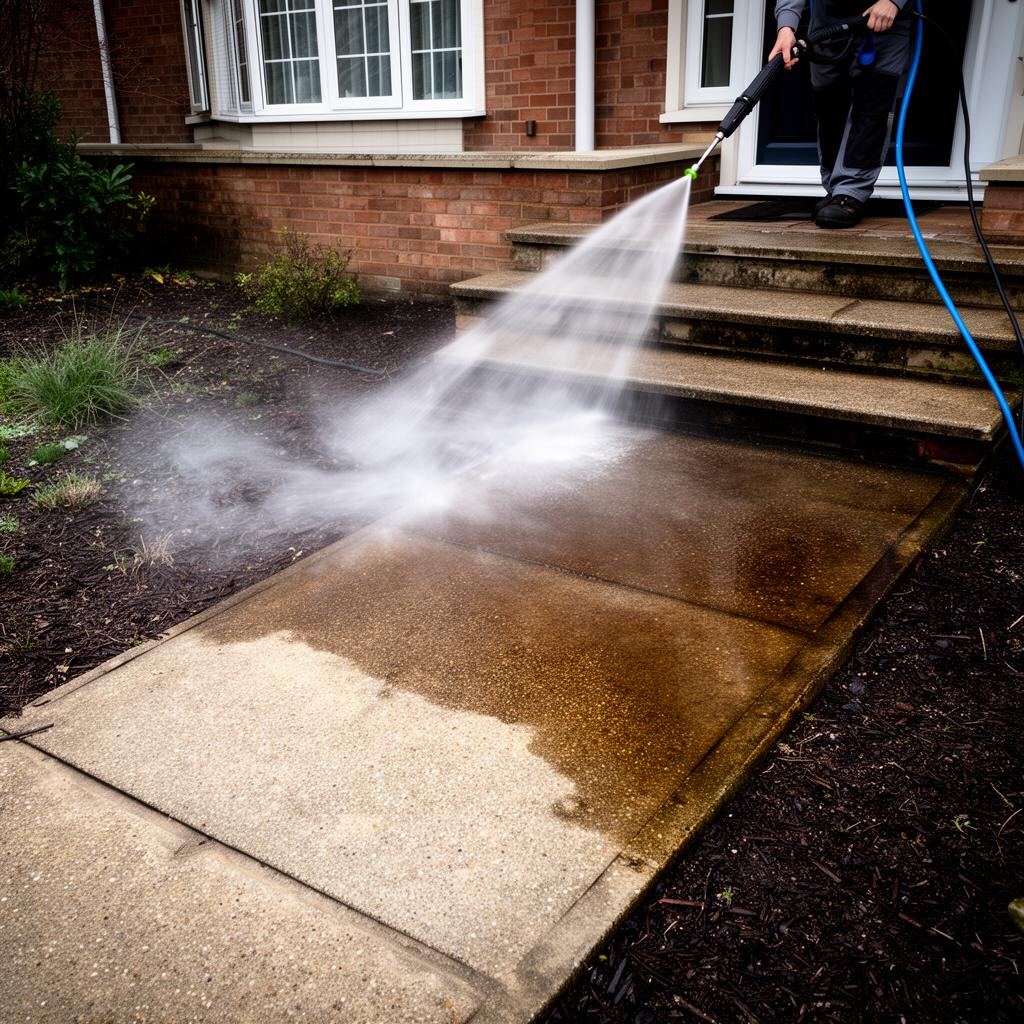
4. Hot pressure wash
Hot water (60–90°C) is the game-changer. It melts the oil and lifts it out of the pores. Cold water just pushes it deeper.
5. Rinse and inspect
We flush the area thoroughly to remove both the oil and the chemical residue, then check if a second pass is needed.
6. Resand if needed
On block paving, pressure washing removes the jointing sand. We resand with kiln-dried sand to stabilise the surface.
Why hot water matters so much
This is the detail most homeowners miss. Engine oil, hydraulic fluid, and diesel all have relatively low melting points. Hot water (especially at 70°C+) softens the oil and reduces its viscosity, allowing it to be lifted out of the surface rather than driven deeper into it.
Cold pressure washing, by contrast, can actually make the stain worse by forcing oil further into the substrate. That's why renting a cold domestic pressure washer and attacking the stain for an hour often leaves you with a bigger, darker patch than when you started.
What about tarmac and resin driveways?
Tarmac is trickier. The oil in the stain can actually dissolve the bitumen binder in the tarmac itself, leaving a soft, permanently damaged patch. We use a gentler, solvent-free degreaser and lower pressure to avoid this. On resin-bound surfaces, we avoid pressure entirely and use absorbent pads combined with a pH-neutral cleaner.
If you're unsure what your driveway is made of, it's worth getting a professional assessment before trying anything aggressive. We've seen £5,000 resin drives ruined by a £50 domestic pressure washer.
The takeaway: Fresh stain? Cat litter and baking soda can work. Old or large stain? You'll need a degreaser and hot pressure washing. Tarmac or resin? Call a professional before you try anything.
Prevention: how to stop oil stains in the first place
The cheapest oil stain removal is the one you never have to do. Park in the same spot? Consider a drip tray or oil-absorbent mat under the engine bay. Get small leaks fixed quickly — a £30 gasket replacement is far cheaper than a £300 driveway restoration. And if you do spot a fresh drip, act immediately. Absorb, don't rinse.
For new driveways, a quality sealant creates a protective barrier that makes future spills much easier to clean. We can apply this as part of a professional driveway cleaning service.